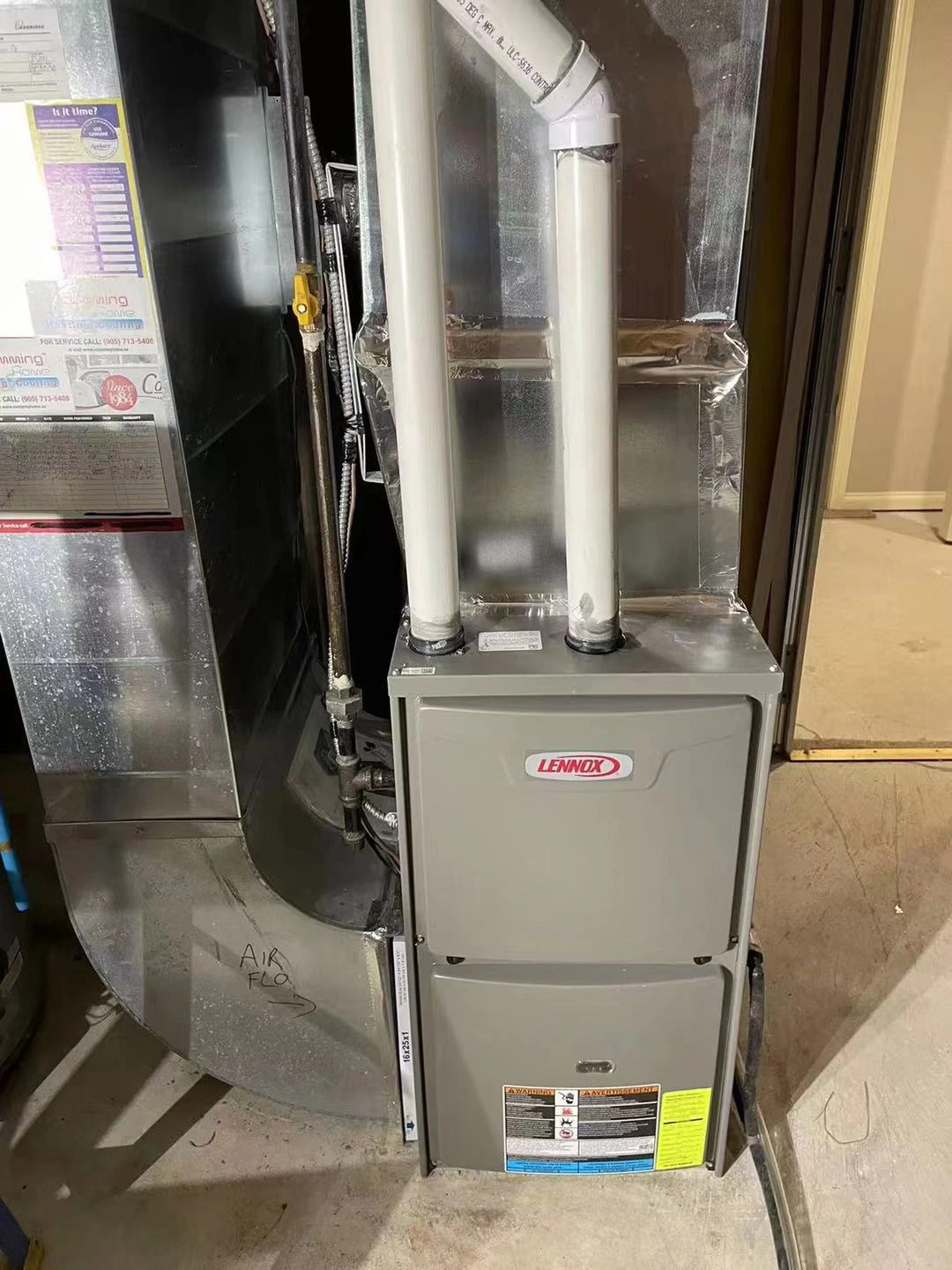
You turn up the thermostat, the vents start moving air, and then it hits you: that air is cold, not warm. It's an unsettling moment, especially on a chilly Columbia evening when you're expecting comfort instead of confusion. A furnace that runs but blows cold air is one of the more puzzling heating problems homeowners deal with, because the system sounds like it's working. It just isn't doing its job.
The tricky part is that "furnace blowing cold air" isn't one single problem. It can point to something as simple as a thermostat setting or as serious as a safety shutdown protecting your home. Knowing the difference matters, both for your comfort and your safety.
Let's walk through each cause, what it looks like in a Columbia, SC home, and what to do about it.
This is one of the most common, and easiest to fix, reasons a furnace blows cold air. If your thermostat's fan setting is switched to "On," the blower runs continuously, even when the furnace itself isn't actively heating. Between heating cycles, that means cold or room-temperature air moving through your vents.
Setting the fan to "Auto" means the blower only runs while the furnace is actively producing heat, which is what most homeowners expect and prefer. This setting takes seconds to check and requires no tools, so it's worth ruling out before anything else.
If you just switched your system on for the first time this season, give it 10 to 15 minutes before assuming something's wrong. Furnaces need a short warm-up period before the air coming through the vents feels hot, similar to how a stovetop takes a moment to heat up. If cold air continues well past that window, it's time to move on to the next possible cause.
A clogged filter restricts the airflow your furnace depends on to heat efficiently and safely. When airflow is severely limited, heat can build up inside the unit faster than it can circulate. This often triggers a safety shutoff that stops the heating element or gas valve while leaving the blower running, so you feel air movement without warmth.
Filters should typically be replaced every one to three months, more often in homes with pets or higher dust levels. Routine filter changes are one of the simplest ways to prevent this issue, and they're a standard part of furnace maintenance.
Beyond a dirty filter, a few other issues can cause a furnace to overheat and shut down its heating function while the blower keeps running:
When a furnace overheats, the safety shutoff is doing exactly what it's designed to do: protecting your home and equipment from damage. It's also a clear sign the system needs professional attention.
If your furnace's pilot light has gone out, or an electronic ignition component has failed, the blower can still run on schedule while no heat is actually being produced. Older furnaces with a standing pilot light may simply need relighting, following the instructions on the unit's access panel. Newer furnaces with electronic ignition can fail to ignite due to a worn igniter or a dirty flame sensor.
Frequent or repeated ignition failures usually point to a component that needs replacing rather than a quick relight. Because ignition systems involve both gas and electrical components, this generally isn't a DIY repair.
High-efficiency furnaces produce condensation as part of normal operation, and that moisture has to drain properly. If the line clogs, a safety float switch can prevent the furnace from igniting at all, even though the blower continues to run. This is a common, non-emergency cause, particularly in systems that haven't had recent maintenance, and clearing it correctly often takes the right tools and access, making it a good candidate for a professional visit.
Furnaces that run on natural gas or propane need a consistent fuel supply to ignite and produce heat. If the supply is interrupted or the valve isn't fully open, the furnace may fail to ignite, leaving you with blower-only operation and cold air. Many furnaces are designed to shut down safely rather than attempt to run without adequate fuel.
Safety note: If you smell gas, notice a rotten-egg odor, or hear hissing near the furnace, leave the home immediately and contact your gas utility or 911 from a safe location. This is not something to troubleshoot on your own.
Sometimes the furnace itself is working correctly, but the heat never makes it to your living spaces. Gaps, disconnections, or holes in ductwork allow heated air to escape into attics, crawl spaces, or walls before reaching your vents. This can make rooms feel like they're only getting cold air, even though the furnace is producing heat elsewhere in the system.
Duct issues are easy to overlook because they aren't visible, which is why a professional inspection is often needed to confirm the source rather than assuming the furnace itself is at fault.
A cracked heat exchanger is one of the more serious causes of cold air from a furnace, and it deserves special attention. The heat exchanger separates the combustion process from the air that circulates through your home. If it develops a crack, combustion byproducts, including carbon monoxide, can potentially mix with your indoor air supply.
Many furnaces include safety controls designed to shut down heating output if this type of failure is detected, which can present as cold air blowing from the vents. If you have any reason to suspect this issue, especially alongside a carbon monoxide alarm sounding, treat it as a safety priority and contact a professional immediately rather than attempting to diagnose it yourself.
Here's a quick order of operations for Columbia homeowners dealing with cold air from the furnace:
If the furnace is still blowing cold air after these checks, it's time to bring in a professional HVAC company rather than keep guessing at the cause.
If your furnace isn't turning on at all rather than running and blowing cold air, the causes and checks are different; see our guide on furnace won't turn on instead.
Some causes of cold air from a furnace are quick fixes. Others involve gas, electrical components, or safety systems that require a trained technician. Call for professional service if:
A licensed technician can accurately diagnose which of these causes is affecting your system and recommend the right repair, rather than replacing parts that were never the actual problem. Our furnace repair services in Columbia, SC are built around precise diagnostics, including airflow testing, so the fix addresses the real cause the first time.
Helpful reading on diagnosing furnace problems and knowing when it's time to call for repair.
A furnace that runs but doesn't heat is more than an inconvenience. It can signal anything from a simple thermostat setting to a safety issue that needs immediate attention, and Columbia homeowners shouldn't have to guess which one it is.
Air Logic provides prompt, honest furnace repair throughout Columbia, SC and the surrounding Midlands, backed by precise diagnostics and a repair-first approach. If your furnace is blowing cold air instead of heat, don't wait for it to turn into a full no-heat situation. Call us at (839) 221-3512 or reach out through our Contact Us page to schedule furnace repair today.

From AC repairs to heating installations and indoor air quality solutions, our certified HVAC specialists are ready to help whenever you need us. Count on us for honest guidance, dependable service, and quick response times.
Reach out today, we’re always here to keep you comfortable.
Air Logic
534 St. Andrews Rd, #C, Columbia, SC 29210
(839) 221-3512