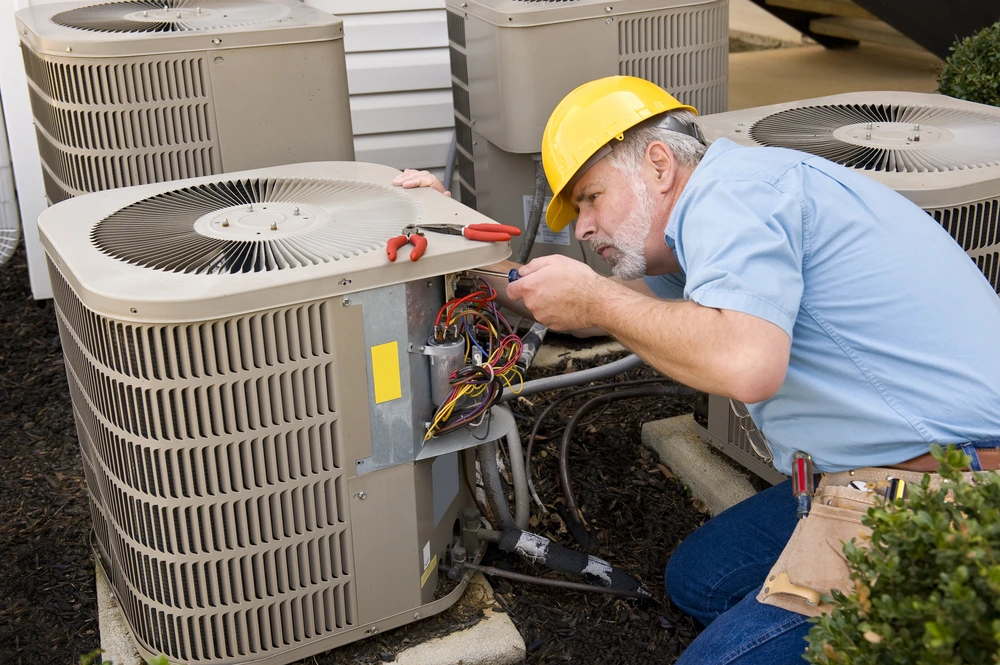
If your power bill climbs every July and spikes again during the first cold snap of winter, your heating and cooling system is the likely cause. In Columbia, the HVAC system runs for most of the year, so every point of efficiency shows up on your bill month after month.
That is why so many homeowners ask us about heat pump energy efficiency. The labels are full of acronyms, and the promises can sound too good to be true. Below, the Air Logic team breaks down what those numbers mean and what actually determines how much a heat pump saves in a Columbia, SC home.
Heat pump energy efficiency describes how much heating or cooling a system delivers for each unit of electricity it uses. Because a heat pump moves heat instead of creating it, it can deliver roughly 3 to 5 units of heat per unit of electricity, which is 300% to 500% efficiency. It is rated by SEER2 for cooling and HSPF2 for heating, and higher numbers mean lower operating costs.
Most heating systems make heat. A gas furnace burns fuel, and electric heat strips or baseboard heaters turn electricity directly into warmth. A heat pump works more like a refrigerator: it uses refrigerant and a compressor to move heat from one place to another.
The electricity runs the compressor and fans. It is not the heat source itself, which is why a heat pump can deliver more energy than it consumes.
COP compares heat delivered to electricity used at a given moment. A COP of 3 means the system delivers 3 units of heat for every 1 unit of electricity.
Here is how that compares with other heating options:
| Heating system | Approximate efficiency |
|---|---|
| Electric heat strips or baseboard heat | 100% (COP of 1) |
| High-efficiency gas furnace | Up to about 98% |
| Air-source heat pump | 300% to 500% (COP of 3 to 5), depending on model and conditions |
According to the U.S. Department of Energy, today's air-source heat pumps can cut electricity use for heating by up to 75% compared with electric resistance heat such as electric furnaces and baseboard heaters.
COP is a snapshot. The ratings on the yellow EnergyGuide label measure efficiency across a full season, which better reflects your actual bills. The "2" in each name reflects updated federal test procedures that took effect in 2023 and better account for real ductwork conditions.
| Rating | What it measures | Federal minimum (split heat pump) | Generally considered high efficiency |
|---|---|---|---|
| SEER2 | Cooling efficiency over a season | 14.3 | 17 and above |
| HSPF2 | Heating efficiency over a season | 7.5 | Above 9 |
| EER2 | Cooling efficiency at a fixed hot test condition | Varies by size and region | Higher is better for peak heat |
In a hot-humid climate like ours, cooling hours far outnumber heating hours. That makes SEER2 the rating to weigh most heavily, with EER2 a useful tiebreaker for how a system holds up on 95-degree afternoons. HSPF2 still matters, especially if you are replacing electric heat strips or baseboard heat.
ENERGY STAR certified heat pumps meet efficiency levels above the federal minimum and are independently tested. The label is a quick way to narrow your options, though it does not replace comparing the actual SEER2 and HSPF2 numbers.
A real-world example
Say your current system is a 15-year-old unit rated around 10 SEER under the older test. Replacing it with a modern 16 or 17 SEER2 heat pump means noticeably less electricity for the same amount of cooling. Exactly how much you save depends on your usage, your home, and Dominion Energy's or your co-op's rates, which is why we look at your current system before estimating savings.
Efficiency ratings are measured in a lab. In your home, the climate determines how much of that efficiency you actually use.
A heat pump removes moisture as it cools. High-efficiency models with variable-speed compressors run longer at lower output, which pulls more humidity out of the air. The Department of Energy notes that high-efficiency heat pumps dehumidify better than standard central air conditioners. In practice, that can let you feel comfortable at a slightly higher thermostat setting, which saves energy on its own.
Heat pumps lose some efficiency as outdoor temperatures fall, because there is less heat in the air to move. Standard models start working noticeably harder somewhere below 25 to 30 degrees. Columbia's winters spend relatively little time in that range, so a heat pump here runs in its efficient zone for most of the heating season.
On the coldest mornings, backup heat strips may switch on. They work, but they run at 100% efficiency instead of 300% or more, so the less often they run, the better.
Two neighbors can install the same model and get very different power bills. The rating sets the ceiling; these factors decide how close you get to it.
An oversized system short-cycles, wasting energy and leaving humidity behind. An undersized one runs nonstop and leans on backup heat. A load calculation based on your home's insulation, windows, and layout prevents both.
Refrigerant charge, airflow, and electrical setup all have to be right for the system to reach its rated efficiency. A premium heat pump installed poorly can perform like a budget unit. That's why when it comes to installing a heat pump it's best left up to a professional HVAC company.
Leaky or uninsulated ducts in a hot Columbia attic can waste a large share of the air you pay to condition before it reaches your rooms. Sealing ducts, or choosing ductless mini-split installation where ducts are not practical, protects your investment.
Single-stage units run at full blast or not at all. Two-stage and variable-speed (inverter) models adjust output to match demand, which reduces energy use during the many mild days of a Columbia spring and fall.
Deep nighttime setbacks in winter can trigger backup heat strips when the system tries to recover in the morning. Steady settings, or a heat pump compatible smart thermostat, usually work better. Professional thermostat installation makes sure the backup heat is configured correctly.
Attic insulation, weatherstripping, and caulking around windows reduce how hard the heat pump has to work in every season.
Dirty filters and coils force the system to work harder for the same output. Twice-yearly heat pump maintenance keeps efficiency close to where it started, and changing filters on schedule is the simplest thing you can do yourself.
Helpful reading on heat pump installation and choosing the right system for your Columbia home.
A heat pump's efficiency rating tells you what the equipment can do. Whether your home actually gets that performance depends on sizing, installation, ductwork, and upkeep. Get those right, and you can expect lower energy use, steadier temperatures, and better humidity control through every Columbia season.
For more than 30 years, Air Logic has helped homeowners across Columbia and the Midlands get more comfort from every dollar they spend on energy. Our certified technicians evaluate your home's size, insulation, and ductwork, help you compare efficiency levels honestly, and test every system after installation. When a new system makes sense, our financing options can help spread out the cost.
Curious how much more efficient your home could be? Call us at (839) 221-3512, or contact us online to schedule an in-home assessment.


From AC repairs to heating installations and indoor air quality solutions, our certified HVAC specialists are ready to help whenever you need us. Count on us for honest guidance, dependable service, and quick response times.
Reach out today, we’re always here to keep you comfortable.
Air Logic
534 St. Andrews Rd, #C, Columbia, SC 29210
(839) 221-3512